
Cancún Is Taking the Sargassum Fight Offshore: What the 2026 Plan Means for Travelers
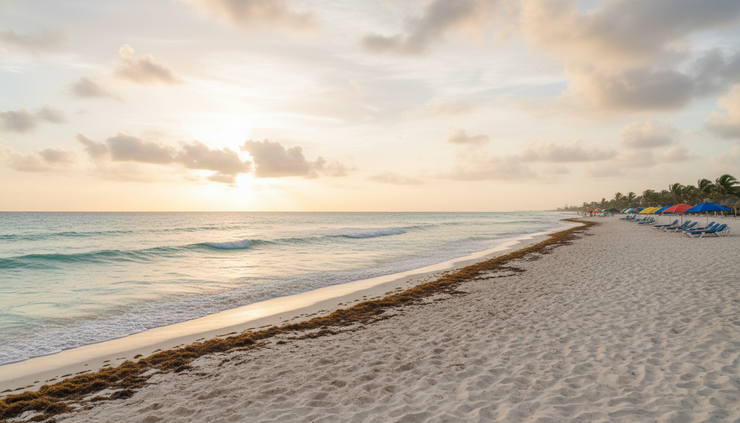
For years, Cancún’s most visible response to sargassum began after the seaweed had already reached the coast. Hotel teams walked the shoreline before sunrise, tractors crossed the sand, and trucks carried away what had accumulated overnight.
Cancún’s expanded 2026 strategy begins with a different idea: intercept more sargassum before it reaches the beach.
The new plan connects satellite monitoring, offshore containment barriers, specialized collection vessels and facilities intended to process recovered seaweed. Mexico’s federal government formally announced the wider Quintana Roo initiative on July 17, 2026, with the goal of moving a greater share of collection away from the shoreline and into the sea.
That is encouraging news for travelers, but it needs to be understood realistically. The system is designed to reduce accumulation and improve response times. It cannot guarantee that every beach in Cancún or the Riviera Maya will remain completely free of sargassum every day.
Why Cancún Is Moving the Sargassum Response Offshore
Sargassum is a floating brown seaweed that occurs naturally in the Atlantic. In open water, floating mats provide shelter, food and breeding habitat for a variety of marine life. The problem begins when exceptionally large quantities reach shallow coastal areas and accumulate faster than they can be removed.
Once stranded along the shoreline, sargassum can become waterlogged, mix with sand and begin decomposing. That makes it more difficult and expensive to collect while also reducing the quality of the material for potential reuse.
For this reason, the most important idea behind the 2026 plan is not simply “more beach cleaning.” It is to act earlier.
Detect large offshore concentrations.
Estimate where winds and currents may carry them.
Position barriers and vessels in priority areas.
Collect more sargassum while it is still floating.
Remove what still reaches the shoreline.
Transport suitable material for controlled processing.
The individual tools are not entirely new. Quintana Roo has previously used monitoring, barriers, boats and beach-cleaning teams. What is changing is the scale of the operation and the attempt to connect each stage into one coordinated interception network.
How the New Interception Plan Is Supposed to Work
The strategy is best understood as several layers working together. No individual layer can solve the problem by itself.
Satellite information can warn authorities that large concentrations are approaching, but it cannot remove them. Barriers can redirect floating seaweed, but vessels are still needed to collect it. Ships can recover large quantities, but they also need unloading points and an appropriate destination for the material.
The strength of the system depends on how effectively those separate stages connect.
Part of the system | What it does | What travelers should understand |
Satellite monitoring | Tracks significant offshore concentrations and estimates their movement | Provides earlier warning, not a perfect forecast for every hotel beach |
Offshore barriers | Contains or redirects sargassum toward selected collection areas | Useful in suitable locations but affected by waves, currents and weather |
Collection vessels | Removes floating material before or near coastal arrival points | Can reduce the volume reaching shore but cannot capture every incoming mat |
Beach cleaning teams | Remove what still reaches the sand | Will remain necessary even with better offshore interception |
Processing infrastructure | Receives and potentially transforms collected material | A developing part of the strategy rather than an instant solution |
The practical takeaway is that Cancún is not relying only on rakes and beach crews. The strategy is becoming more layered.
Satellite Monitoring Gives Crews a Head Start
Sargassum does not suddenly appear at the edge of the Cancún Hotel Zone. Large concentrations can travel through the tropical Atlantic and Caribbean before reaching Quintana Roo.
Monitoring teams use satellite imagery together with information about wind, currents and ocean conditions to estimate where major concentrations may move. That information can help authorities decide where collection vessels should operate and which coastal areas may need additional preparation.
Satellite monitoring does not create an exact long-range forecast for an individual resort. Local winds and currents can redirect, disperse or accelerate floating mats shortly before they reach the coast.
Its real advantage is time.
Even a limited warning window can help crews position vessels, inspect barriers and prepare coastal teams before a significant arrival. As the system becomes more coordinated, it may also support more useful and timely local updates for residents, hotels and travelers.

Offshore Barriers Guide Sargassum Toward Collection Areas
Floating barriers are among the most visible elements of the response, but they are sometimes misunderstood.
They are not walls intended to seal off every beach. Instead, they are positioned in selected areas to slow, redirect or concentrate floating sargassum where collection boats can reach it more efficiently.
Their effectiveness depends on the shape of the coastline, water depth, boat access, currents and wave conditions. During rough weather or exceptionally heavy arrivals, seaweed may move around, underneath or over a barrier.
This is why barriers work best as one part of the larger system. They can guide the material, but they cannot remove it by themselves.
Quintana Roo’s wider 2026 strategy has set a goal of expanding the regional barrier network to approximately 16,000 metres. That figure applies across participating parts of the state and should not be interpreted as 16 kilometres of barriers surrounding Cancún alone.
The ARM Sargassum Adds Greater Offshore Capacity
The most attention-grabbing addition is the ARM Sargassum, designated BSO-102, a new Mexican Navy collection vessel commissioned on June 1, 2026 for incorporation into the Caribbean sargassum strategy.
Quintana Roo officials have described the vessel as considerably larger than the existing ARM Natans, with a proposed collection capacity of as much as 600 tonnes per day under suitable operating conditions.
A larger ship is particularly useful when substantial offshore mats remain concentrated enough to collect efficiently. Recovering the seaweed before it reaches shallow water may reduce shoreline accumulation, limit the amount of sand mixed into the material and make later processing easier.
However, its maximum stated capacity should not be interpreted as a guaranteed daily result.
Collection depends on sea conditions, the location and density of the sargassum, operating schedules, unloading capacity and the ability of support teams to transport the recovered material. The ship is a major new tool, but it cannot patrol every beach or capture every approaching patch.

Puerto Morelos Could Become Part of the Long-Term Solution
Collecting sargassum creates another challenge: deciding what to do with it afterward.
Moving large quantities from the beach to an unsuitable dumping area does not solve the environmental problem. The material needs controlled transportation, storage, testing and an appropriate form of treatment.
In July 2026, the federal government formally declared a 39.9-hectare Circular Economy Development Hub in Puerto Morelos. The project is intended to support research and businesses capable of transforming materials such as sargassum into potentially useful products.
Possible applications being explored in Quintana Roo include biomaterials, bioplastics, fertilizers, energy and construction inputs. The final use depends on the quality of the collected seaweed, processing methods, salt content and the presence of contaminants.
The hub should therefore be described as developing infrastructure, not as a finished plant already processing every tonne recovered from the coast.
Its importance is nevertheless considerable. A larger fleet cannot continue collecting greater volumes indefinitely without a responsible destination for the material.
What Is Already Operating—and What Is Still Being Expanded
The new plan did not begin from zero.
Beach-cleaning crews, resort maintenance teams, selected barriers, marine vessels and regional monitoring were already part of Quintana Roo’s response before the July announcement.
What is new is the push to expand those resources and connect them more deliberately. The federal plan was announced in mid-July with implementation scheduled to begin within 15 days, meaning the wider rollout started near the end of July rather than appearing as one completed installation on a single date.
Status | What it means |
Already operating | Beach cleaning, hotel maintenance, regional monitoring, selected barriers and existing marine collection |
Being expanded | Offshore interception, barrier coverage, coordination between authorities and collection-vessel capacity |
Newly incorporated | The ARM Sargassum BSO-102 and the broader federal operating plan |
Still developing | Full processing capacity at the Puerto Morelos circular-economy hub |
Still impossible to guarantee | Completely sargassum-free beaches in every area and on every day |
The distinction matters. A more advanced system can noticeably improve management without eliminating the winds, currents and immense offshore blooms that determine how much sargassum approaches the Mexican Caribbean.
How Travelers Should Read Cancún Beach Updates
A photograph labeled “Cancún today” may show only one stretch of coastline at one particular hour.
Conditions can vary between the eastern and northern sides of the Hotel Zone, between mainland Cancún and Isla Mujeres, and between Cancún, Puerto Morelos, Playa del Carmen and Tulum.
When reviewing a beach update, look for three details:
The exact beach, hotel or coastal area
The date and approximate time of the observation
Whether the seaweed is floating offshore, accumulated on the shoreline or already being removed
Morning photographs may show the results of overnight cleaning. Several hours later, wind can bring in a new concentration. The opposite can also happen: a beach shown with an overnight arrival may look significantly better after crews finish working.
Recent, location-specific information is more useful than a dramatic photograph that does not identify where or when it was taken.
How to Plan a Flexible Cancún Vacation
Sargassum deserves consideration, but it should not control every decision about the vacation.
The most resilient Cancún itineraries include several different types of experiences and leave enough flexibility to move one activity when local conditions change.
Swim in a cenote near Puerto Morelos, Playa del Carmen or Tulum.
Visit archaeological sites such as Tulum, Cobá or Chichén Itzá.
Plan a jungle, zipline or ATV experience.
Choose a cultural, culinary or wildlife-focused excursion.
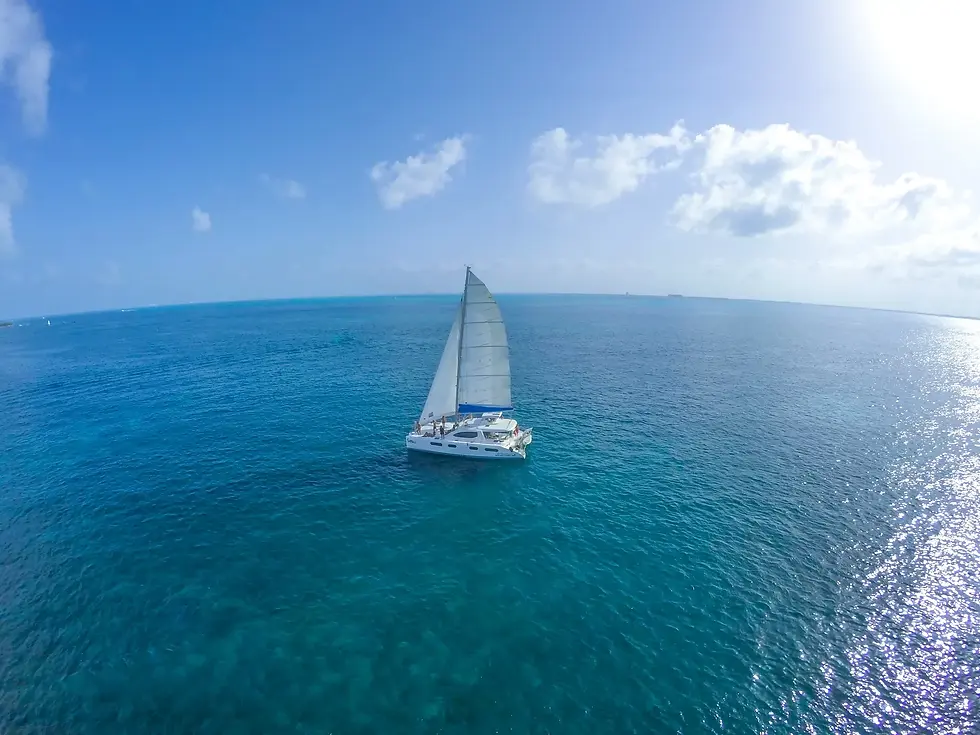
Keep an island or marine activity flexible until closer to the operating date.
Reserve time for pools, spas, shopping or lagoon-side dining.
Check beach conditions shortly before departure rather than trying to predict one hotel’s shoreline several months in advance. After arriving, ask about what the beach has looked like during the previous two or three days—not what it “usually” looks like during the season.
Travelers can also explore Cancún and Riviera Maya excursions through All Seasons Tours and compare marine, cultural and inland options before deciding how tightly to schedule each day.
Some parts of the vacation cannot be controlled, but airport arrival logistics can. Arranging Private Cancún airport transportation before traveling allows visitors to leave the airport with their hotel transfer already organized. All Seasons Tours currently offers private and deluxe transportation between Cancún or Tulum International Airport and participating hotels.
The goal is not to build an entire vacation around avoiding sargassum. It is to create enough variety that one changing beach condition does not determine the quality of the trip.
Frequently Asked Questions
Will Cancún’s beaches be sargassum-free in 2026?
No. The expanded plan is designed to reduce the amount reaching managed coastlines and improve response times, but no system can guarantee completely clear beaches every day.
What is Cancún’s new sargassum interception system?
It is a coordinated strategy combining satellite monitoring, floating barriers, collection vessels, shoreline cleanup and infrastructure for processing recovered material. It is part of a wider Quintana Roo plan rather than a system serving only Cancún.
What is the ARM Sargassum?
The ARM Sargassum, or BSO-102, is a Mexican Navy vessel commissioned in June 2026 for the Caribbean sargassum response. State officials have announced a collection capacity of up to approximately 600 tonnes per day under suitable conditions.
Is the new ship already solving the problem?
The vessel adds significant collection potential, but no single ship can solve a regional phenomenon. Its impact depends on monitoring, weather, barriers, support boats, unloading sites and processing capacity.
Is the entire interception plan already finished?
No. Several components were already operating, while the wider federal plan began rolling out near the end of July 2026. The Puerto Morelos processing hub and full system-wide coordination remain developing parts of the strategy.
Does every Cancún beach receive the same amount of sargassum?
No. Beach orientation, currents, wind, reefs, island geography and local cleanup operations can create noticeably different conditions between nearby areas.
When should travelers check beach conditions?
Check shortly before departure and again after arriving. Prioritize recent updates that identify the exact beach, date and time.
Should sargassum concerns stop a Cancún vacation?
Usually not. Cancún and the Riviera Maya offer cenotes, archaeological sites, cultural attractions, adventure activities, islands, dining and resort experiences beyond one stretch of beach.
The realistic outlook for 2026
Cancún’s expanded sargassum strategy is meaningful because it changes where the response is intended to begin.
Instead of depending primarily on crews waiting for the seaweed to reach the sand, Quintana Roo is investing in earlier detection, offshore interception, greater collection capacity and a potential destination for recovered material. The approach is more complete than beach cleaning alone, although the severe scale of the wider 2026 Caribbean bloom means that results will continue to vary by location and day.
For travelers, the honest message is also the most useful: this is progress, not perfection. Check recent local conditions, keep part of the itinerary flexible and build a trip that includes more than one beach.
Explore All Seasons Tours for transportation, excursions and practical Cancún travel information that can help the different parts of the vacation fit together naturally.

Comments